
Profitability Strategies
How to Recession-Proof Your Amazon Vendor Business in 2026
 Written by Martin HeubelUpdated 16 Apr 2026
The global ecommerce landscape is shifting. Tariffs and a changing geopolitical context require manufacturers to adapt. Especially with Amazon.
Whether you're managing a brand in North America, Asia, or Europe: U.S. tariffs and the Middle Eastern conflict have introduced a great level of uncertainty to most manufacturing brands. On top of that, currency fluctuations and supply chain volatilities are once again becoming the norm.
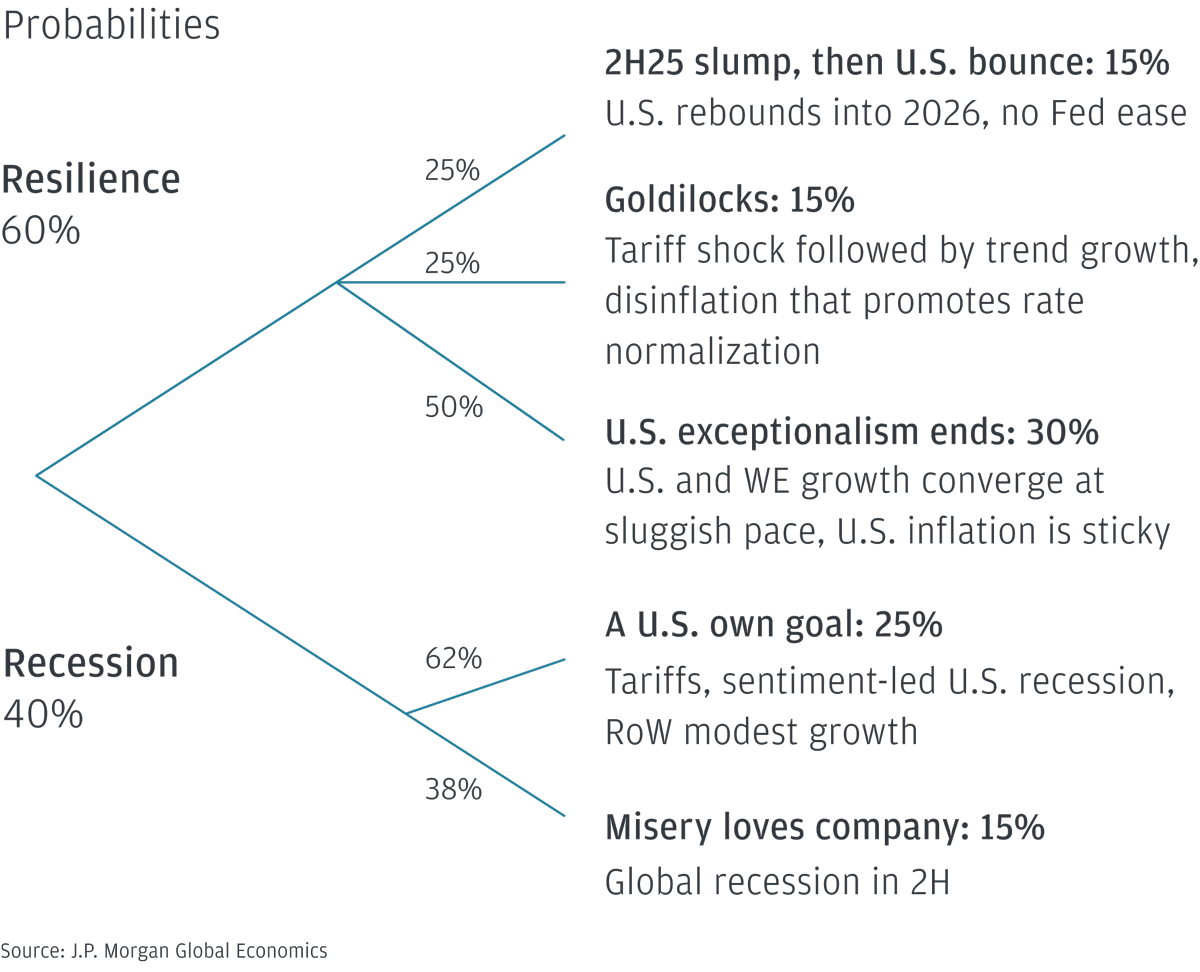
J.P. Morgan now predicts a 40% chance of a global recession in 2026:
Protecting your 1P vendor margins is difficult enough in a stable economy. But in times of uncertainty, your teams must apply an extra layer of commercial rigour – or else lose profitability very quickly.
So today, let's take a closer look at how Amazon 1P vendors can prepare for an economic downturn.
1. Gather your benchmark data
Before you can strengthen your business, it's critical to know where you stand. Start by capturing the status quo of your most important KPIs – before market conditions shift further.
Tools like Stackline, Profitero, or commerceIQ can help your teams monitor real-time profitability metrics such as Average Selling Prices, Net PPM and gross margins at the ASIN level. This also allows you to pay close attention to any negativ mix effects that pose headwinds to your customer P&L.
Equally important is defining your addressable market on Amazon. Thankfully, virtual shelf analytics providers allow you to build a clear picture of your target market, whether through keyword-based monitoring or Amazon browse nodes.
Use this data to map your brand's category share over the last 6- and 12-months. This extended lookback period helps eliminate seasonal demand fluctuations and short-term effects of consumer behavioural changes.
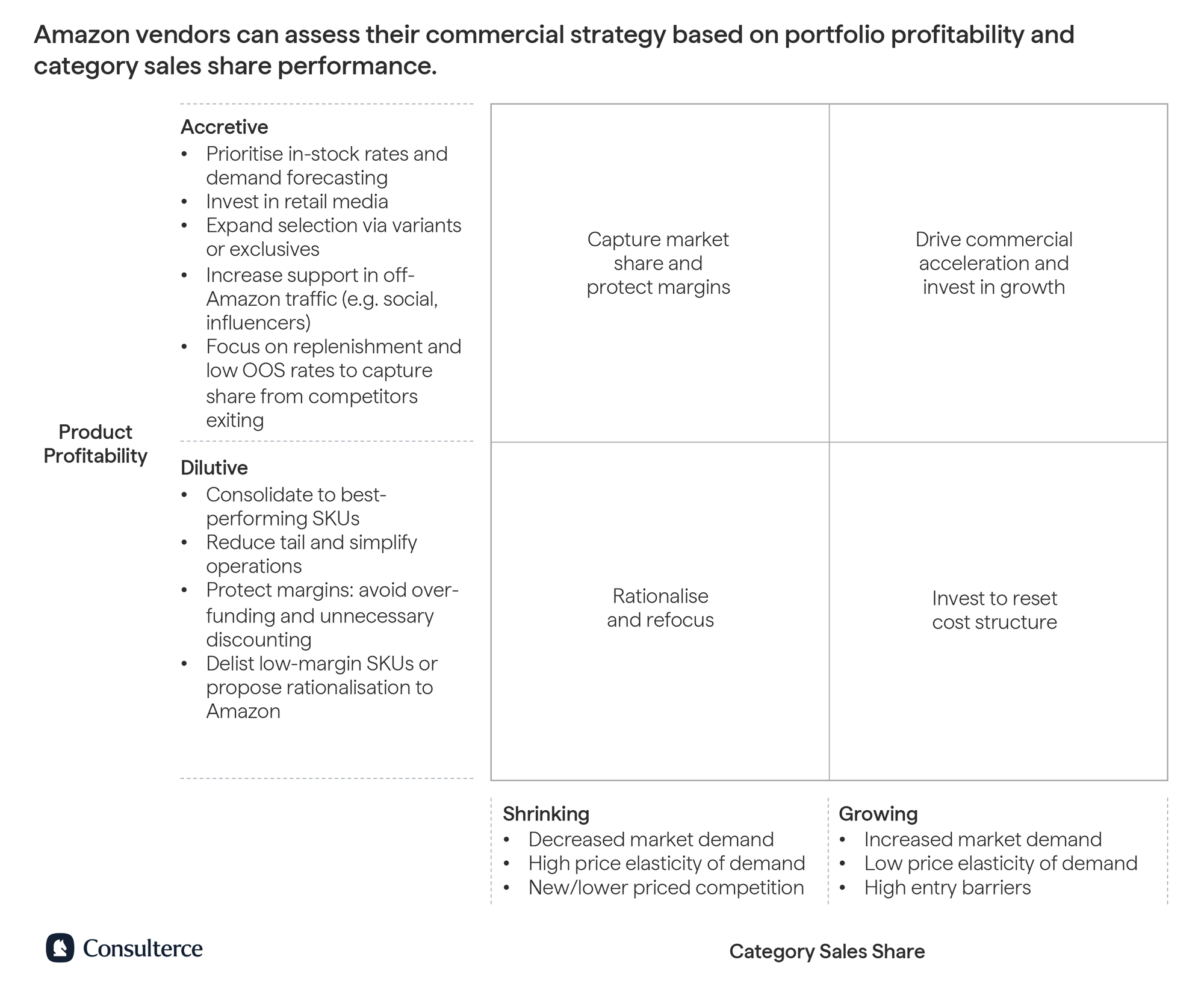
Once your benchmarks are in place, pressure-test your commercial plans through scenario planning. For example, have your teams define key priorities to increase market share beyond price promotions, e.g., through offsite traffic via social media campaigns.
2. Protect margins with off-cycle negotiations
Now, I get it. If you've just closed your annual vendor negotiation with Amazon, chances are you don't want to disrupt your trade by reopening discussions about cost prices and trade investments.
But the truth is: Keeping your old cost prices most likely does a disservice to your business. That's because tariffs and other trade restrictions were not factored into your 2025 budget.
If your landed costs have increased due to import duties that put your margins under pressure, it's vital that you factor this new reality into your Amazon cost price base.
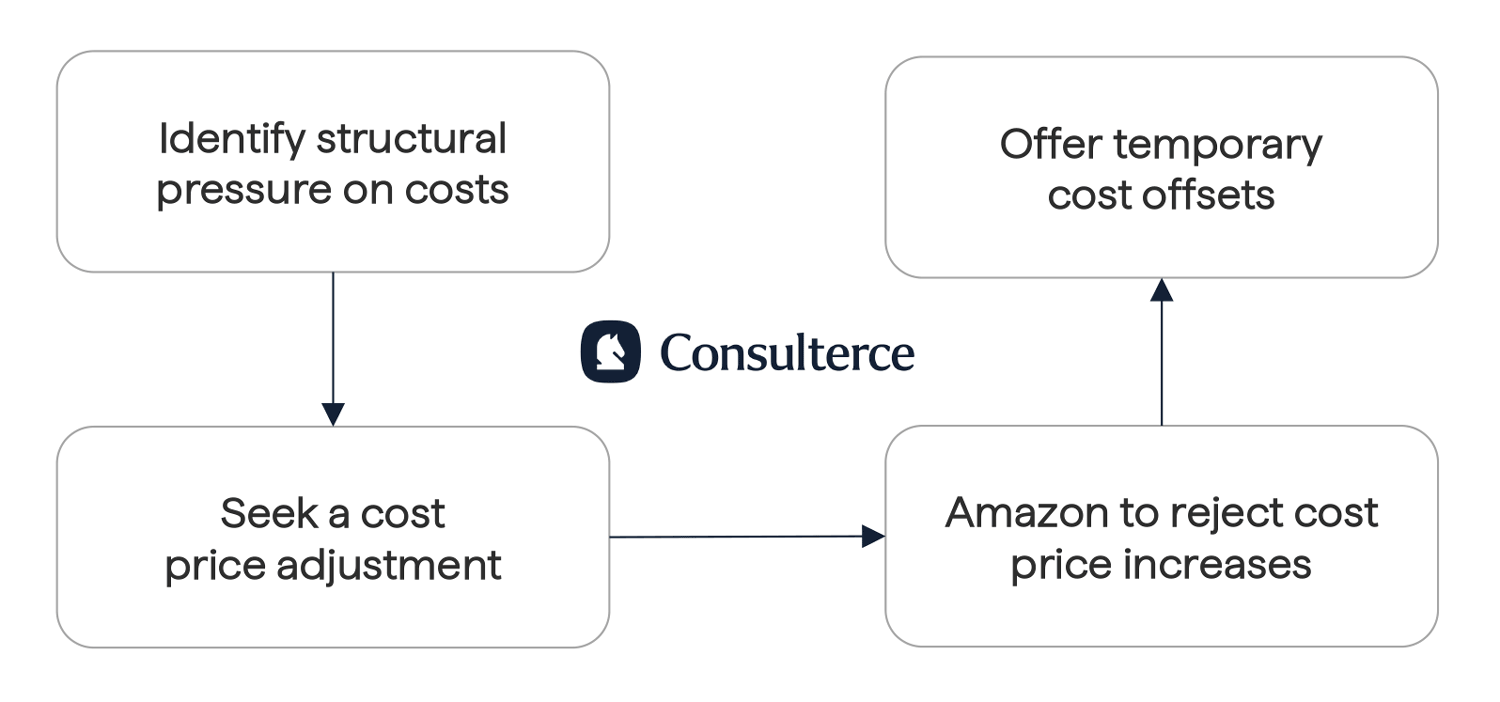
While Vendor Managers often claim that cost prices can only be changed during the AVN, know that this is a tactic, not a rule. Don't let it stop you from renegotiating your cost prices with Amazon mid-year.
To make it easier for your Vendor Manager to accept cost changes, consider offering a cost support agreement limited to a maximum of 60 days.
3. Rationalise your product portfolio
Next, let's take a look at your assortment. Times of economic uncertainty can be a great opportunity to reassess your portfolio strategy with Amazon. Now is the time to prioritise high-margin, high-velocity SKUs and remove products that drag your bottom line.
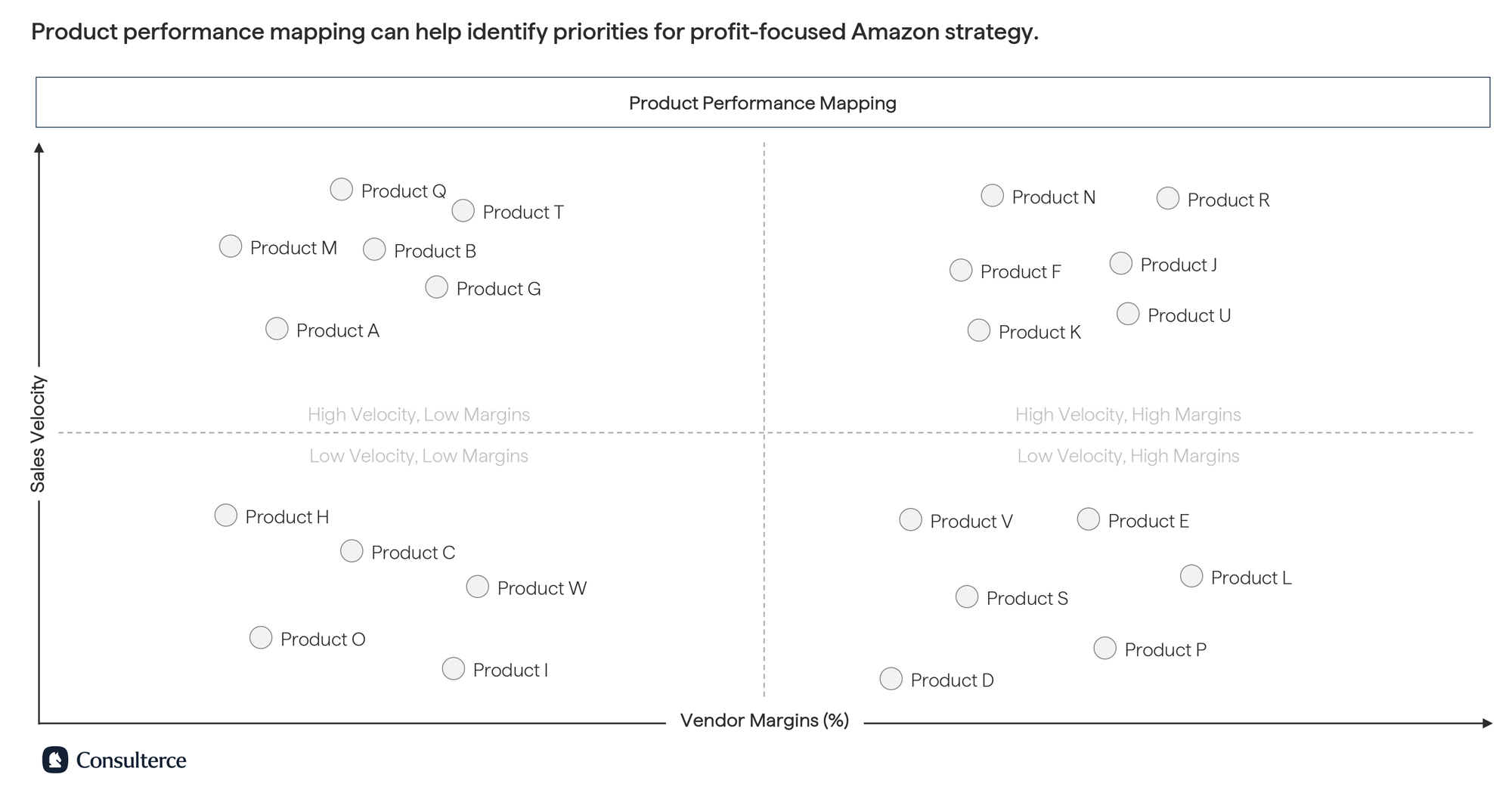
You can use my AVP Matrix to segment your portfolio by net margin and Amazon's Net PPM. Consider delisting products that Amazon aggressively price-matches and hold little strategic value for customer acquisition. The same goes for products subject to constant chargebacks, shortages, or logistical issues.
These decisions also unlock negotiation leverage. In CPG categories, Amazon often pushes for access to low ASP ("Nielsen") selection that is widely distributed but structurally unprofitable. Consider making access to these products subject to conditions that improve your cash flow or trade investments.
Looking ahead, it is equally important to apply the learnings from your portfolio audit to new product launches. You may cancel or delay the launch of innovations with low velocity projections until market conditions stabilise.
4. Expand sales growth via Amazon Business
With sales expected to slow during an economic downturn, many brand leaders turn their attention to ROAS and price promotions. But that shouldn't stop you from going after the low-hanging fruits right in front of you.
Amazon Business can be such an opportunity. It offers a dedicated B2B platform for businesses looking to streamline their corporate purchases, offering bulk order options and industry-specific discounts.
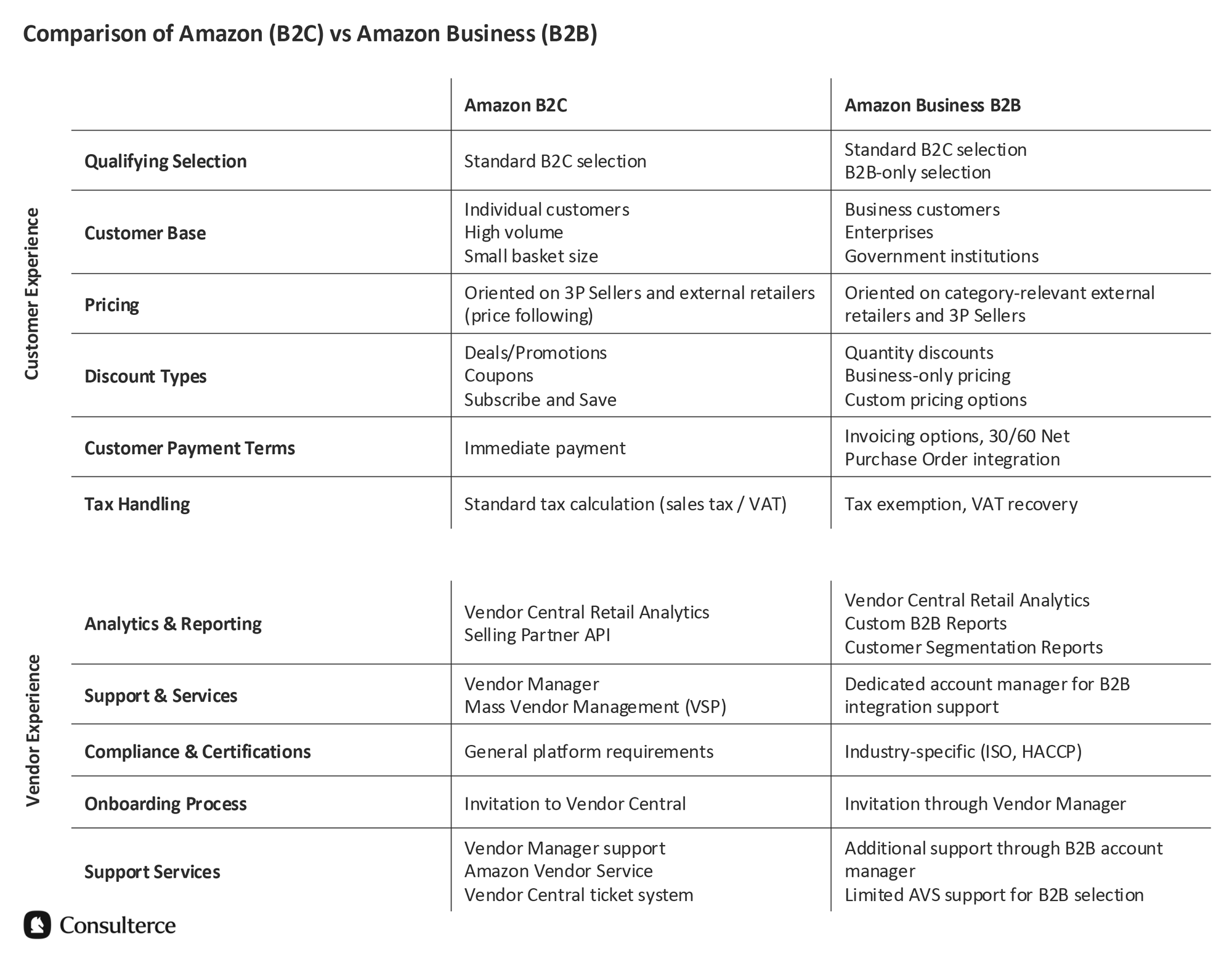
You may not have realised that Amazon already lists your entire B2C range on Amazon Business. So if you haven't yet tried investing in bulk order discounts or introduced your B2B-specific selection on Amazon, this could be a low-cost opportunity to boost sales.
5. Invest in portfolio differentiation strategies
With margins under constant pressure and Amazon's price matching algorithms designed to keep consumer prices low, differentiating your assortment has never been more important.
Launching exclusive products is one of the most effective ways to reduce your exposure to pricing volatility. When paired with a distribution control strategy, it can limit the number of unwanted 3P resellers and let you invest in sales growth without dragging down account margins.
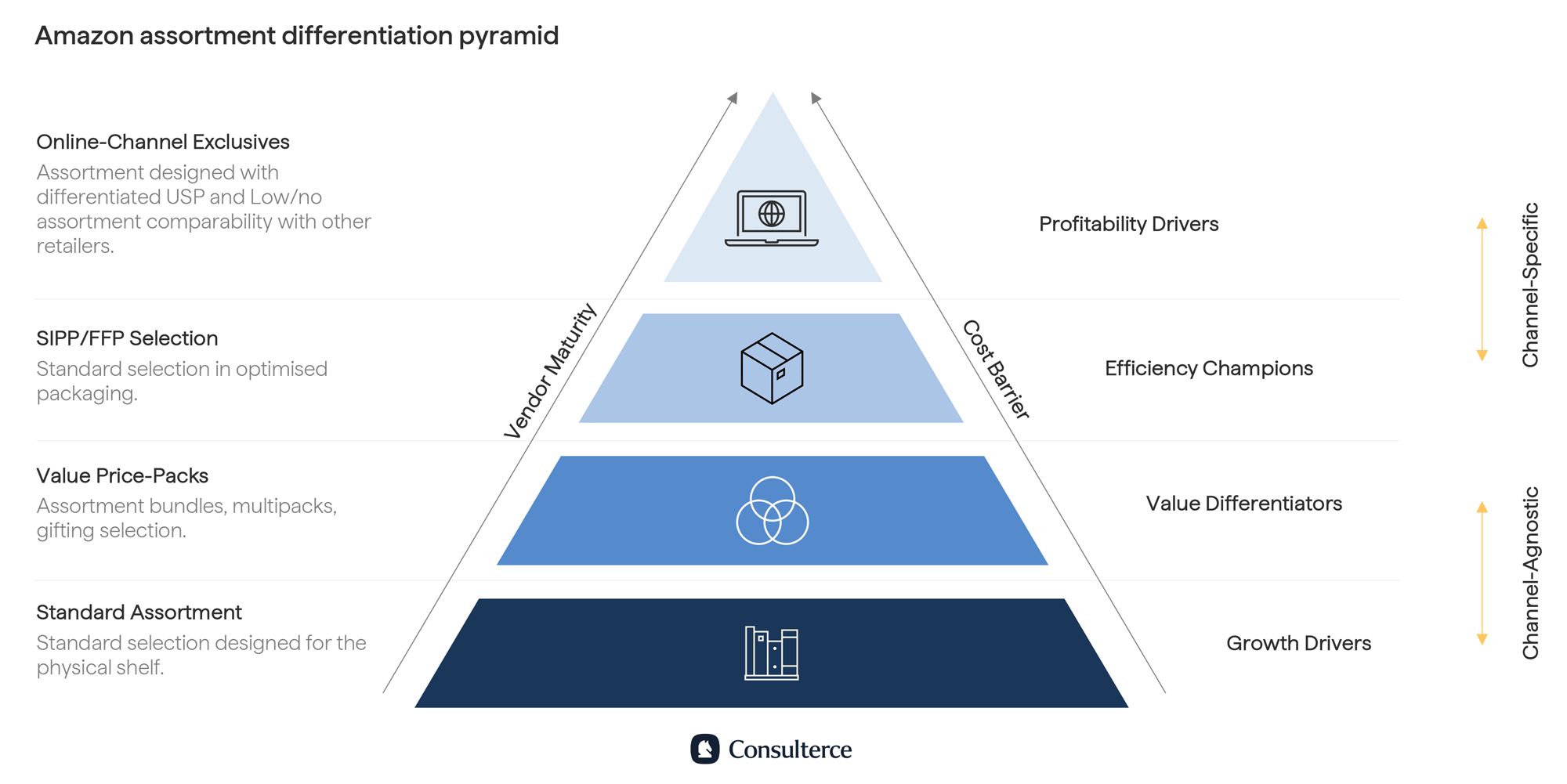
That said, developing exclusives can be expensive. But it doesn't have to be: A simple but effective tactic is to keep your top selling end-of-life products exclusively available for Amazon. Which also helps you balance the profitability of your non-exclusive portfolio.
There are other low-effort ways to differentiate your assortment. For example, creating multipacks, bundling high-velocity SKUs, or slightly modifying pack sizes can help reduce margin pressure and escape Amazon's similarity price matching.
6. Control and reduce your operational costs
While commercial negotiations can yield structural margin improvements, most organisations will see the largest cost savings from operational efficiency improvements.
Start by working with your finance teams to understand the individual cost centres of your Amazon customer P&L and pay attention to your logistics setup. Having Amazon directly pick up goods from your warehouse (WePay) in full pallets (Acapulco) or full truck loads can significantly reduce your logistics cost footprint.
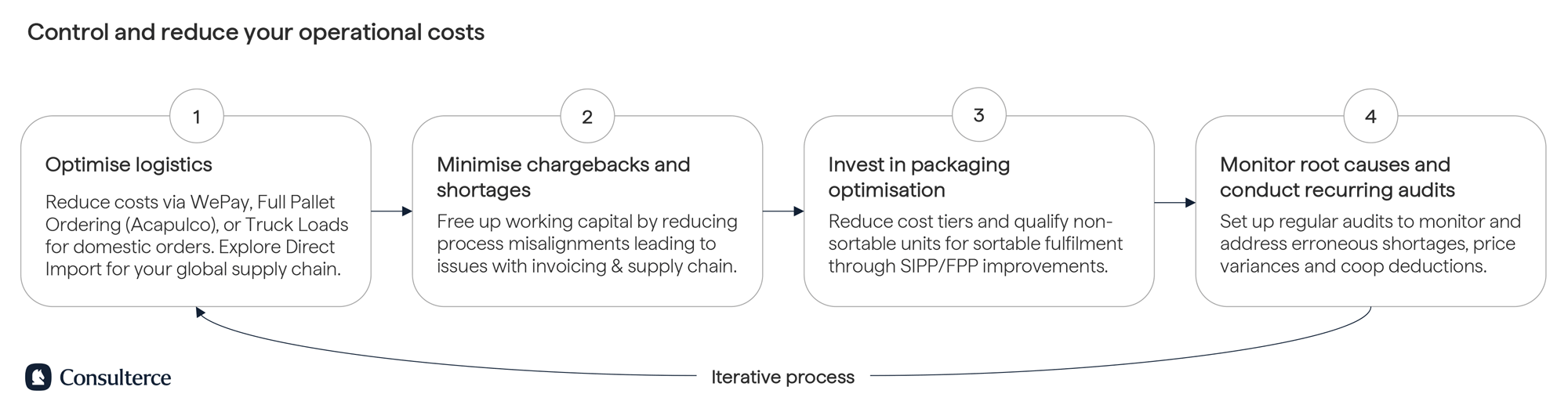
Chargebacks and shortages are another area worth your attention. These deductions don't just hurt your bottom line – they tie up working capital and add unnecessary friction to your supply chain. Addressing their root cause and running regular audits can help identify recurring issues and reduce their impact on your margins.
And don't forget about your packaging! Even a small reduction in pack size can often shift products into a more favourable cost tier or reclassify non-sortable products as sortable. This can significantly lower the margin pressure for both – you and Amazon.
7. Realign organisational ownership structures
Finally, let's discuss the most difficult part: reviewing your organisational setup with Amazon. Of all the levers available to vendors during an economic downturn, this is the hardest one to execute – but also the most impactful.
If your business still manages Amazon through local market teams, you're likely duplicating efforts and misallocating resources across commercial, operational, and marketing functions. This leads to misaligned trade terms across markets, cross-border sales and operational friction that all eat into your margins.
Meanwhile, Amazon has moved to a Pan-European vendor management structure, in which brands have lost their local buyer and now negotiate with a Pan-EU Vendor Manager who oversees the EU10 region.
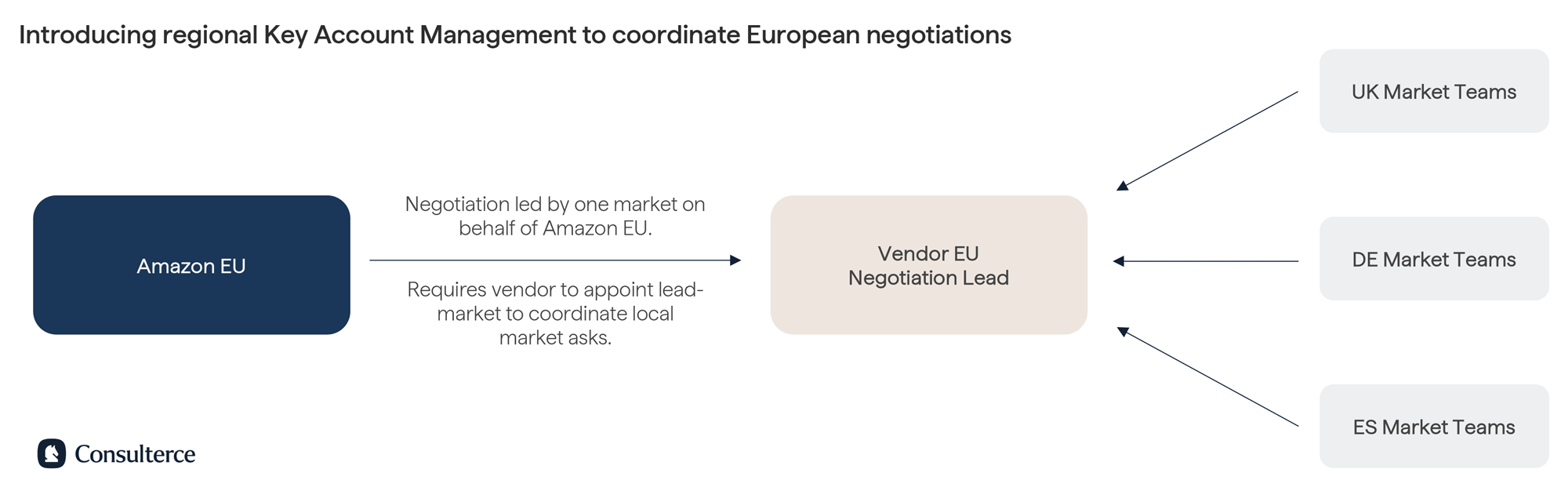
Introducing a regional EU KAM team can help manage Amazon more efficiently, despite offering a different brand selection across markets.
A unified team can negotiate more holistically, align promotional calendars across markets, and secure regional supply chain efficiencies that individual countries would struggle to access on their own.
Yes, shifting from local to regional ownership takes time. But during times of an economic downturn, the business case for a Pan-European management structure has never been stronger.
Conclusion
Preparing your Amazon business for an economic downturn may feel daunting at first. But it's also an excellent opportunity to review cost structures, prioritise your portfolio and eliminate process duplications across markets.
Need help building a resilient Amazon strategy?
If you need help to prepare your Amazon business for an economic downturn, get in touch. I offer tailored consulting services that can help future-proof your commercial and organisational strategies with the online retailer.